

There was a time when an independent African artist had a relatively simple problem: getting discovered.
Today, discovery is only one part of the equation.
Artists have to think about streaming platforms, digital distribution, royalties, publishing, social media, playlist pitching, audience development, copyright, and international markets — often without the infrastructure or professional teams available to established acts.
That is creating a new battle in Africa’s music industry.
The question is no longer simply: who can distribute music?
It is becoming:
Who can build the best distribution ecosystem for African artists?
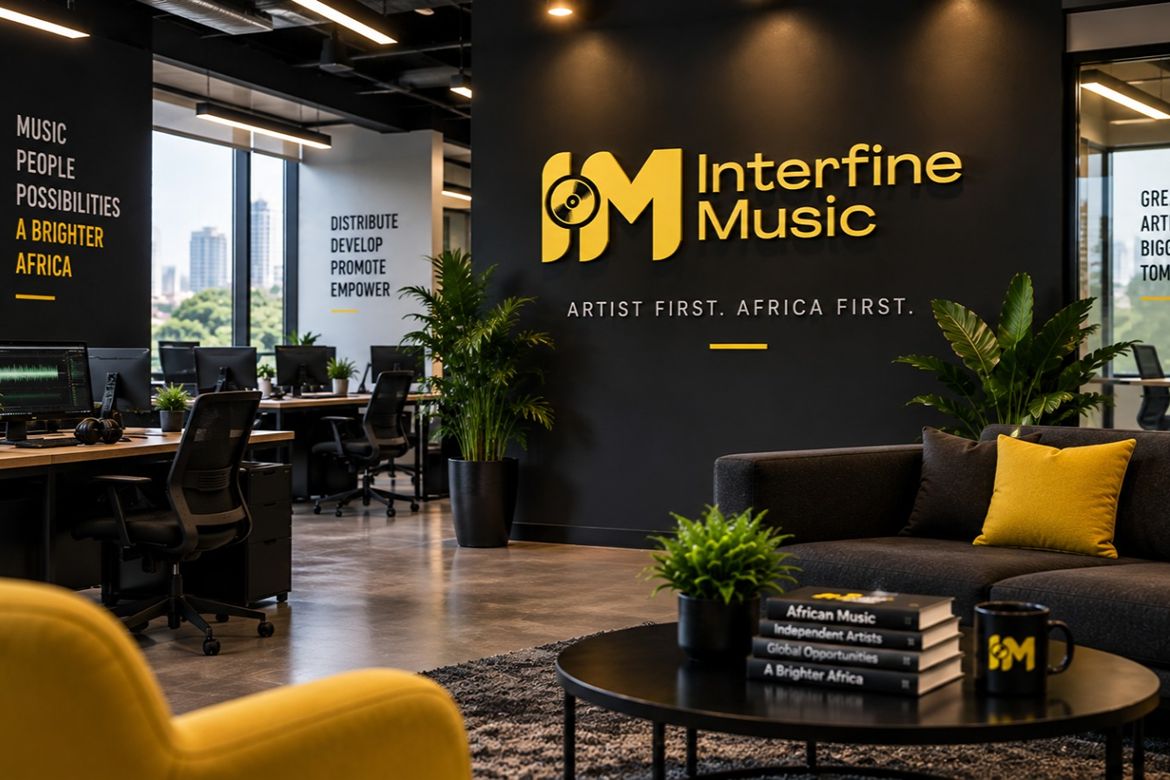
One company increasingly entering that conversation is Interfine Music, a Kenya-based music distribution platform founded around an Africa-first philosophy.
The company currently says its network reaches more than 200 digital service platforms across 150 countries, while its broader offering includes music promotion, publishing administration, education and artist development.
Interfine Music wants to change what “distribution” means
For years, music distribution was primarily understood as the process of delivering a recording to stores and streaming services.
The digital revolution made that process faster.
But it did not necessarily make the music business easier for artists to understand.
An artist can upload a song in minutes and still have little understanding of how royalties work, how publishing revenue is collected, or what happens when a release starts generating streams in different territories.
Interfine Music’s approach is based on the idea that distribution should be connected to education and artist development.
The company’s services include DSP editorial pitching, influencer campaigns, digital advertising, regional PR and radio placements, publishing administration, and artist education.
In other words, the company is trying to move the conversation from:
“Where can I upload my song?”
to:
“How can I build a sustainable music career?”
Why African artists may be looking for something different
Africa’s music industry is not a single market.
A Kenyan artist may have a strong audience in Kenya, listeners throughout East Africa, and a growing diaspora audience in Europe and North America.
A Nigerian artist can have listeners across Africa and the United Kingdom.
A South African artist may simultaneously operate across local streaming services, international platforms, social media, and live performance markets.
That creates a complicated distribution requirement.
Artists need international access, but they also need local knowledge.
Interfine Music calls this approach “Artist First, Africa First.”
Its distribution network is designed to connect African artists with global streaming platforms while also accounting for African platforms and regional services.
That positioning is important because the future of African music is unlikely to be either local or global.
It will be both.
The payment question
The music distribution conversation often focuses heavily on streaming reach.
But for independent artists, the more important question may be what happens after the stream.
Getting paid efficiently can be just as important as getting music onto another platform.
Interfine Music has made local accessibility part of its value proposition, highlighting fast payouts and payment channels that reflect the way African creators transact.
The underlying idea is straightforward:
A global music business still needs local infrastructure.
An artist shouldn’t need to become an expert in international financial systems simply to understand how to access legitimate earnings from their music.
The founder who experienced the problem first-hand
Interfine Music’s story begins with Levis KenRelBis, who experienced some of the frustrations that eventually influenced the company’s creation.

According to the company’s published story, Levis previously worked with an international music distribution company that had entered the Kenyan market.
The relationship initially promised global reach and professional support.
But communication later broke down, while accessing royalties became increasingly difficult.
That experience led Levis to consider whether other African artists were dealing with similar problems.
The answer became the foundation for Interfine Music.
Rather than viewing the problem solely as an individual experience, the company was created around a broader objective: building music infrastructure that gives African artists greater clarity, access, and control.
That founder story gives Interfine a different narrative from companies that entered music distribution purely as a technology opportunity.
Laban Maloi brings another piece to the puzzle
The company’s development also involved Laban Maloi, who brought marketing and artist-relations experience into the founding team.

That matters because music distribution does not automatically create an audience.
An artist can have their song available on hundreds of platforms and still struggle to get people to listen.
Marketing, positioning, and artist development therefore become important parts of the equation.
Interfine’s current services reflect that broader thinking, with support for DSP pitching, social amplification, influencer campaigns, advertising, public relations and radio.
The combination of distribution and promotion is designed to address a problem many independent artists understand well:
- Being available is not the same as being discovered.
- From Spotify to the wider African digital ecosystem
- A modern African artist cannot afford to think about only one streaming platform.
- Spotify and Apple Music provide enormous international reach.
- YouTube remains a critical part of music discovery.
- Boomplay and Audiomack have strong relevance across African markets.
Regional platforms, mobile services and social media can also influence how songs are discovered and consumed.
A distributor therefore needs to think beyond simply delivering a file.
It needs to understand where audiences are.
Interfine says its distribution network connects artists with global DSPs, Africa-first platforms and other digital channels.
That is particularly important for independent artists who may not have a major label’s international infrastructure behind them.
Distribution is becoming a career decision
Choosing a music distributor used to feel like an administrative task.
Today, it can be a strategic decision.
Artists should consider:
- Where their distributor can deliver their music
- How royalties are reported
- How payments are processed
- Whether the artist retains control of their rights
- What happens when a release encounters problems
- Whether publishing is addressed separately
- What promotional support is available
- Whether the company provides useful education
These questions become increasingly important as an artist’s catalogue grows.
A distributor may be adequate for a first single but inadequate for an artist with dozens of releases and international audiences.
That is why Interfine Music is positioning its platform around the broader artist journey rather than distribution alone.
Could Interfine Music become a major force in African music distribution?
That depends on execution, artist adoption, and the company’s ability to scale its infrastructure as its user base grows.
Evidence already shows the concept resonates with the market.
Interfine has previously received attention in Kenyan media for its launch and its focus on helping artists retain control of their music and access human support. TUKO reported on the platform’s launch in 2025 and highlighted its focus on artist support and digital distribution.
The company now presents a much broader proposition around distribution, marketing, publishing and artist education.
Its current platform promotes distribution to more than 200 DSPs and availability across more than 150 countries.
Those numbers alone do not make a distributor the market leader.
But they demonstrate the scale of the ambition.
The bigger story is African music infrastructure
The most interesting part of Interfine Music’s rise may ultimately have little to do with Interfine itself.
It reflects a broader transformation.
African artists increasingly want to participate in the global music economy without giving up local control.
- They want international listeners.
- They want transparent royalties.
- They want accessible payments.
- They want marketing support.
- They want to understand publishing.
And increasingly, they want companies that understand the environment in which they are building their careers.
That is the opportunity Interfine Music is pursuing.
Levis KenRelBis and Laban Maloi are not simply building another upload platform. They are attempting to build a music-business ecosystem around African artists.
Whether Interfine ultimately becomes one of the continent’s dominant music distributors will depend on what comes next.
But one thing is already clear:
Africa’s music distribution market is changing, and Interfine Music wants to help define what comes next.
For artists ready to go global
Interfine Music currently offers distribution to more than 200 digital service platforms and positions its platform around global reach with local African support.
Artists can learn more and start their distribution journey through Interfine Music