

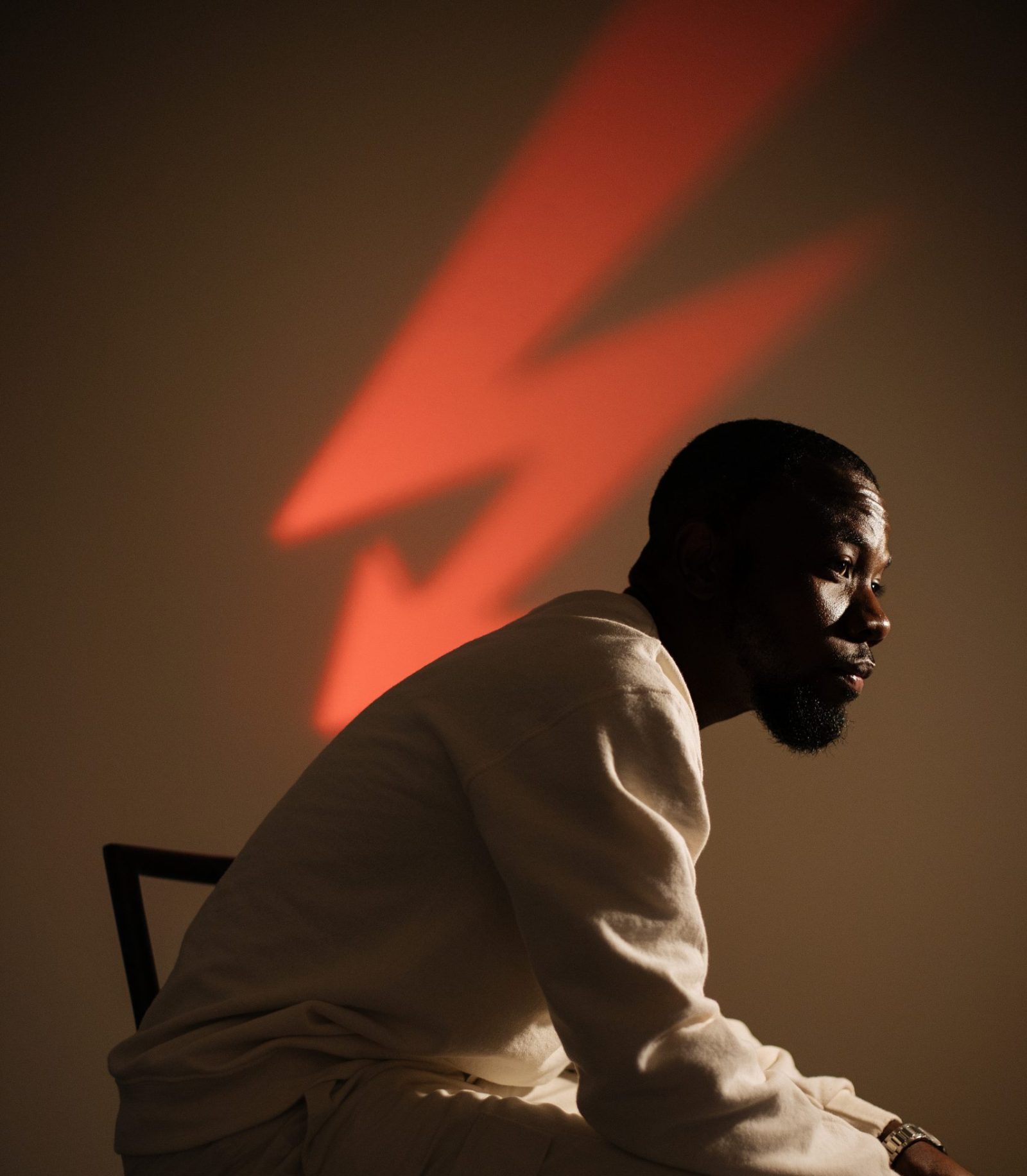
Ghanaian-born artist and neuroscientist Kookusi marks the end of a defining five-year creative journey with “Phase V,” a two-track project featuring “IDK” and “Ten Toes.” The release brings together two sides of his life that have remained closely connected throughout his career: music and scientific research.
Since relocating to the United States to pursue a PhD in Neuroscience and Pharmacology, Kookusi has structured his artistic output around a series of “Phases,” using each period to document both his academic progress and his personal and musical evolution. “Phase V” represents the fifth chapter in that framework and arrives as he completes his doctorate, while leaving open the question of whether the series will continue.
Kookusi’s journey began in Ghana during his pharmacy school years, where Phase I captured the emergence of his voice through the viral “Second-hand Dreams” freestyle, popularly known as the “Uber driver freestyle.” The moment introduced his songwriting to a wider audience and laid the foundation for an artistic identity built around honesty, intellect, and personal reflection.
Phase II followed Kookusi to the United States and coincided with the beginning of his PhD at UNT Health. During this period, he released his debut EP “5foot3,” establishing himself as a technically skilled lyricist while exploring vulnerability and identity within Ghanaian music. His academic achievements also began to gain recognition, including the Thomas and Elena Yorio Award for Outstanding First-Year PhD Student.
With Phase III came “Greetings from Abroad,” a project shaped by Kookusi’s experiences navigating the pressure of pursuing music alongside an intensive scientific career. Its standout track, “Greatest Fear” featuring Arathejay, offered an especially candid look at his anxieties surrounding failure and ambition. At the same time, he advanced his research into the non-brain effects of nicotine in addiction and defended his PhD proposal.
Phase IV saw Kookusi bring his scientific interests even more directly into his music. “Addicts Anonymous,” created with Ghanaian lawyer and rapper RBD, examined addiction beyond the narrow conversation around substance use while challenging the stigma surrounding addictive behaviour. The same period saw Kookusi advance to PhD candidacy and receive an American Heart Association pre-doctoral fellowship supporting his nicotine research.
Building Toward “Phase V”
The road to the final phase was marked by considerable uncertainty. Failed experiments, changing circumstances, reduced social capital, and the pressure of completing a doctorate while maintaining a music career created one of the most challenging periods of Kookusi’s journey.
During this time, a standout verse he submitted for Worlasi’s VIMH challenge became one of his most widely heard moments. For Kookusi, however, the verse was less about public recognition and more like a private conversation with himself.
Phase V began with “This Ability,” an ambitious multidisciplinary project combining choral music, rap, poetry, journalism, and film to tell the story of Emmanuel Eckow Clock Amoako, a Ghanaian athlete born with a limb difference who became a prominent figure in Ghanaian basketball history. The project was accepted into the EU-funded CARE art-for-mental-health catalogue and has since been used as teaching material in classrooms.
Yet behind the recognition was another layer of uncertainty. As Kookusi approached the end of his PhD, questions remained around publications, graduation, and what his next chapter would look like. Those emotions also surfaced in his feature on Obeng King’s “Say a Prayer.”
“IDK” now gives that uncertainty a central place, reflecting on the questions and unresolved feelings surrounding the transition into life after the doctorate. “Ten Toes,” meanwhile, was written at the end of Phase IV as a freestyle and finally receives its release within this closing chapter.
Together, the two tracks capture the reflective spirit of “Phase V,” bringing the five-year framework to a natural conclusion. Kookusi has also pointed to Ecclesiastes 3:11 as an important grounding influence throughout the project.
With his doctorate now complete, the future of the “Phase” framework remains uncertain. What remains clear, however, is the distinctive connection between Kookusi’s two worlds. His music has consistently served as another way of investigating the questions that occupy him in the laboratory: identity, behaviour, vulnerability, resilience, addiction, ambition, and the complexity of being human.
“Phase V” therefore stands not simply as another musical release, but as the closing entry in a remarkable period of artistic and academic growth.