

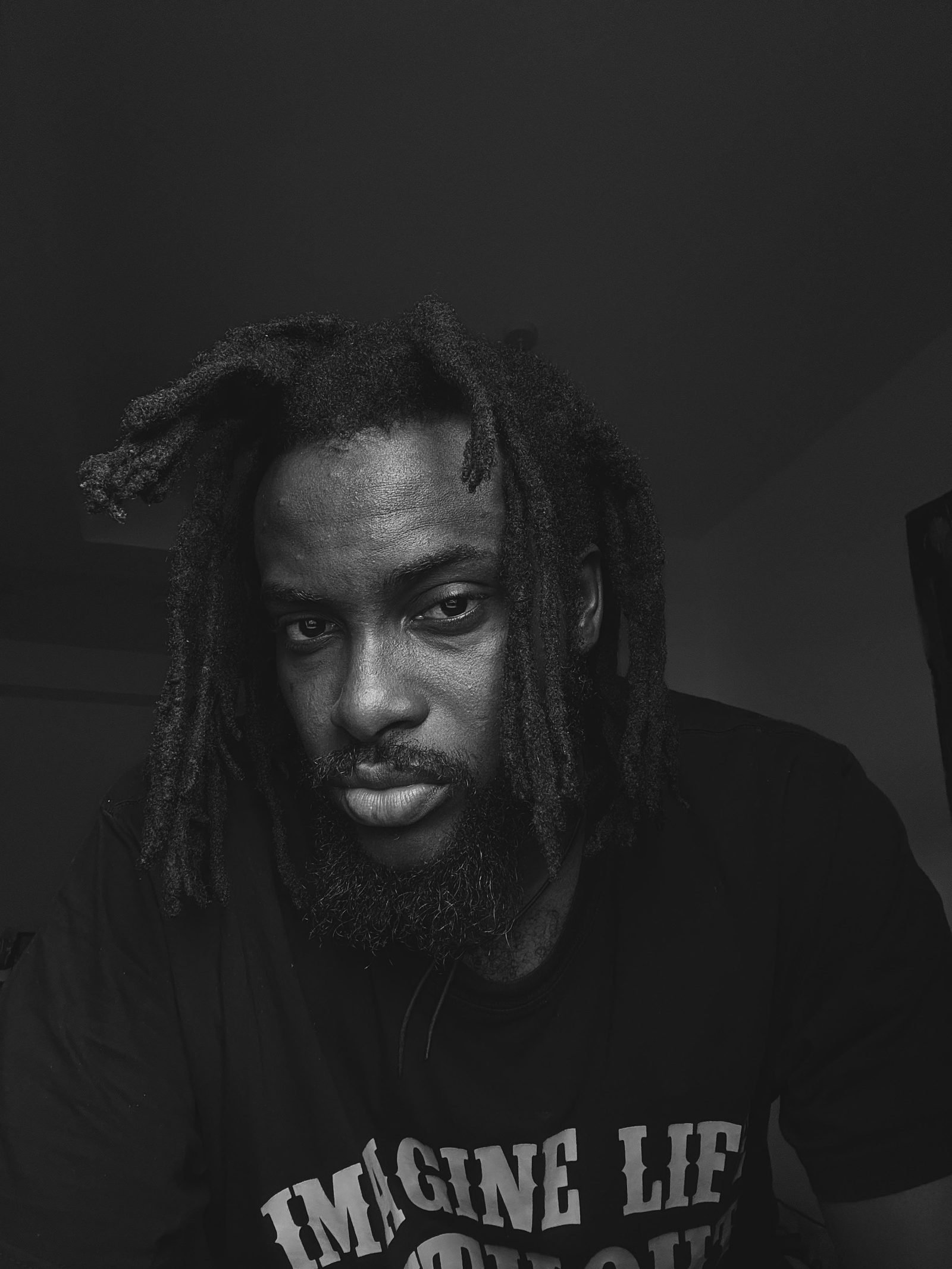
For Samuel Blankson, art was never something that came with a clear set of instructions.
Professionally known as Themanyphacedgod, the Ghanaian artist based in London found his way into digital art through curiosity, persistence and a willingness to figure things out for himself. His journey did not begin with formal training in fine art. Instead, it developed through observation, experimentation and an increasingly strong belief that the artist has to find their own language.
One of the moments that stayed with Blankson came early in his journey, after he encountered the work of Ghanaian artist Ian Quachi on Facebook. Blankson reached out to him and explained that his father was not supportive of his decision to pursue art. The response he received was simple: do whatever you want, but be very good at it.
That advice stayed with him.
It also captured something that would become central to Blankson’s practice. He was never particularly interested in following a prescribed path simply because it was considered the normal one. His decision to study Graphic Design at the University of Education, Winneba, gave him a foundation, but his artistic development continued largely through independent exploration.
Digital art became an especially important part of that process.
For an emerging artist, the cost of materials can create a barrier between an idea and the finished work. Digital tools gave Blankson another way to create, experiment and keep developing his craft. He works primarily with Procreate and Photoshop, using them in a way that retains the physical feeling of painting.
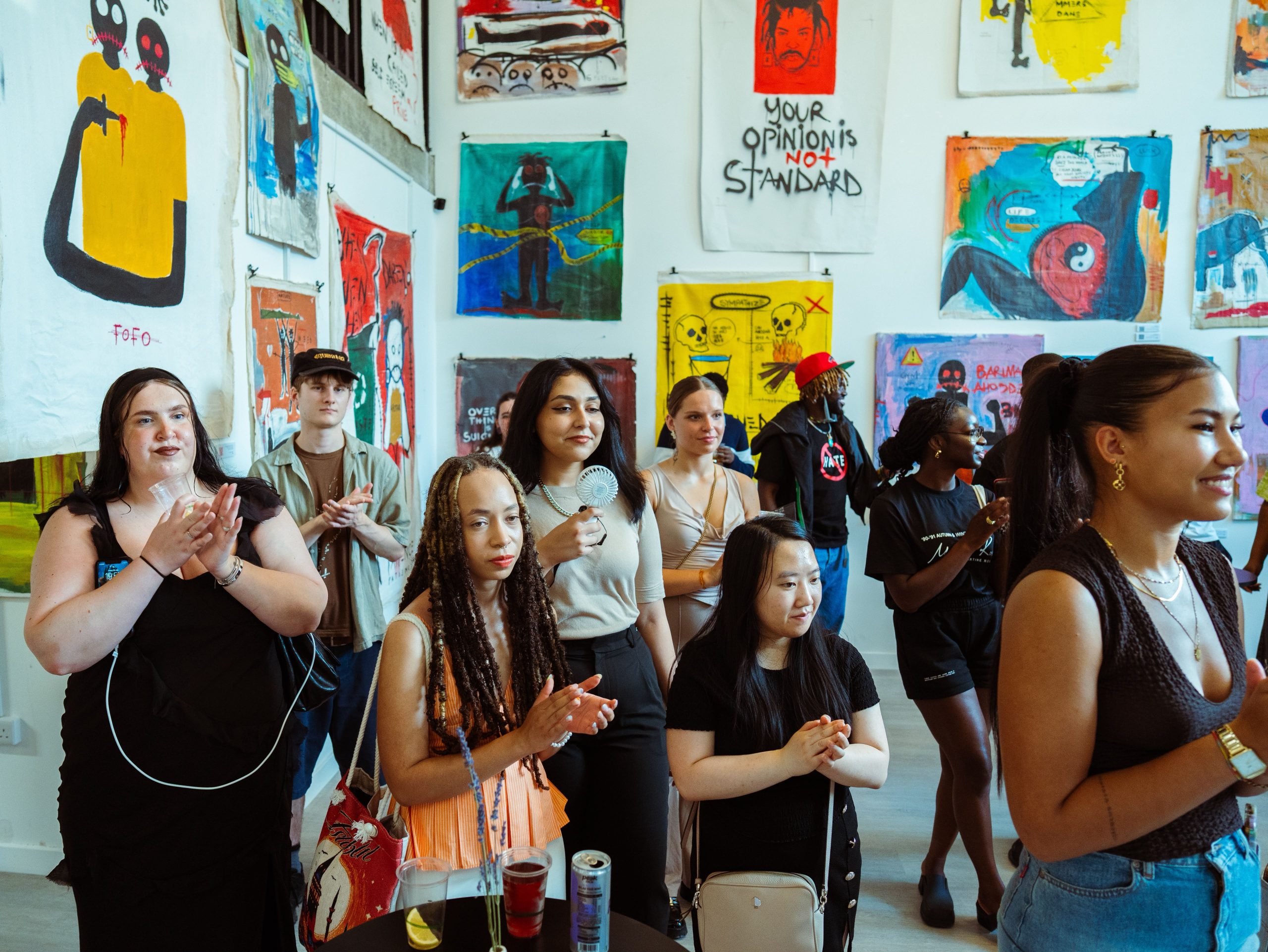
The technology may be digital, but the impulse behind the work remains deeply personal.
Blankson’s work moves between illustration and abstraction, depending on what he is trying to communicate. When an emotion or thought is difficult to express directly, abstraction gives him room to explore it without restricting the viewer to a single interpretation.
Shadows, distorted figures, symbols and words become part of that vocabulary.
When he paints something more recognisable, he still avoids simply reproducing what is in front of him. Traditional symbols and meaningful phrases often enter the composition, creating another layer through which the viewer can approach the work.
For Blankson, words can sometimes carry as much weight as an image.
That relationship between the visual and the written is one of the more distinctive elements of his practice. A phrase can function almost like a visual symbol, while an image can communicate something that language cannot quite capture. The two coexist within his work rather than competing for attention.
His influences include artists such as Ian Quhachi, Egon Schiele, Jean Michel Basquiat, and Pablo Picasso, whose approaches to form, identity, and expression have helped expand what can be done on a canvas. Rather than seeing them as artists to emulate, Blankson views them as trailblazers who opened new paths for future generations of artists.That idea of possibility is important to his own work.
Blankson does not approach a new piece knowing exactly what it will become. Research and inspiration may provide the starting point, but he deliberately leaves room for the work to develop on its own terms.
He describes the experience as surrendering to the creative process.
Once he is in front of the canvas, the distinction between planning and instinct becomes less important. He keeps working until the feeling that brought him to the piece has run its course.
This approach also explains why perfection does not hold much appeal for him.
Blankson sees perfection as something static. Something finished cannot continue to evolve, while an unresolved work still has room to grow. His paintings therefore retain traces of their development. Marks, corrections, layers and unfinished looking forms are not necessarily things to be hidden. They can become part of the work itself.
There is freedom in that uncertainty.
It allows Blankson to create without being overly concerned with whether a piece fits neatly into a particular category. Neo expressionism, surrealism, figurative painting and abstraction can exist within the same practice because his starting point is not a genre. It is expression.
That philosophy extends to the themes he repeatedly returns to.
Freedom. Honesty. The need to call things as they are.
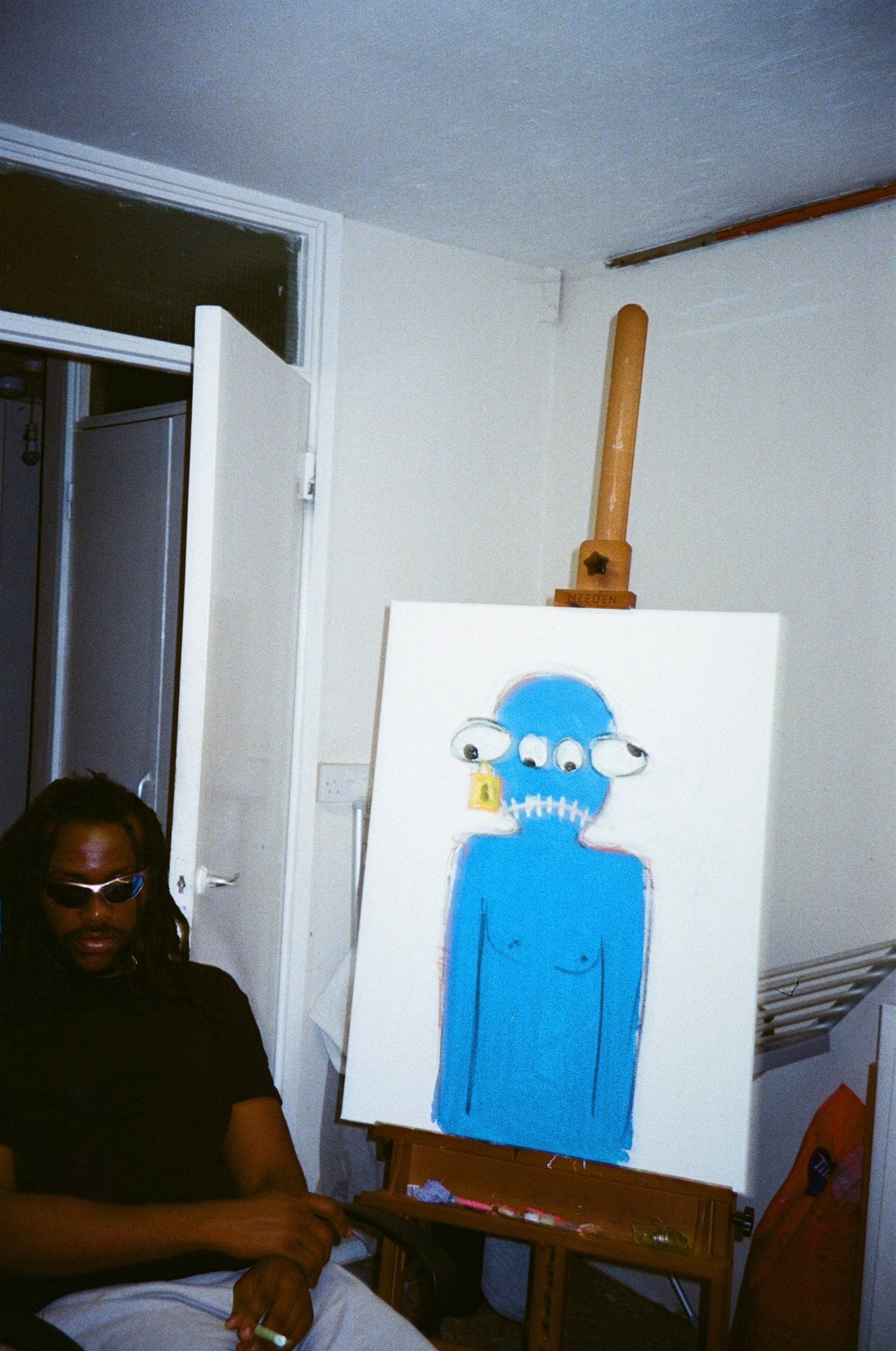
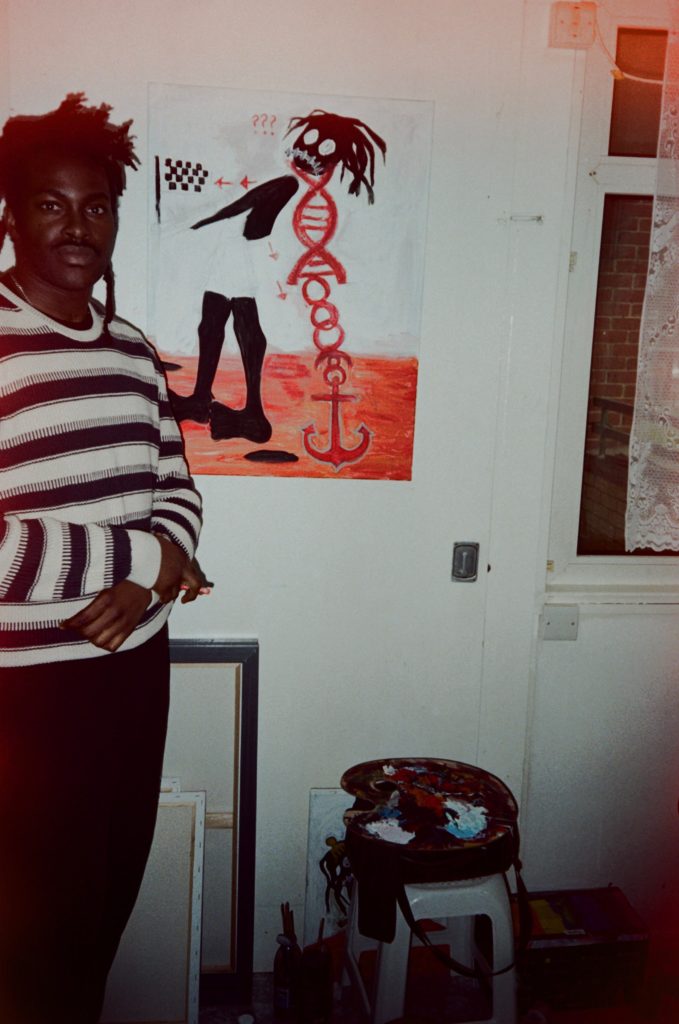
Surreal imagery allows him to explore those ideas without having to explain everything literally. A distorted face can say something about a person’s internal state. A symbol can hold a memory. A few words can change how an entire composition is understood.
The result is work that asks the viewer to participate.
Blankson does not necessarily want someone to look at a painting and arrive at the exact interpretation he had in mind. He is interested in what happens when the viewer brings their own experiences into the encounter.
His evolution as an artist has therefore been less about arriving at a fixed style and more about becoming comfortable with the freedom to keep changing.
That freedom is particularly significant for an artist who describes each piece as a blessing and a moment frozen in time.
For Themanyphacedgod, the canvas is not simply a surface on which to place an image. It is a space where thoughts, emotions, memories, and questions can exist at the same time.
And perhaps that is why his strongest works do not feel like answers.
They feel like invitations to look again.
