

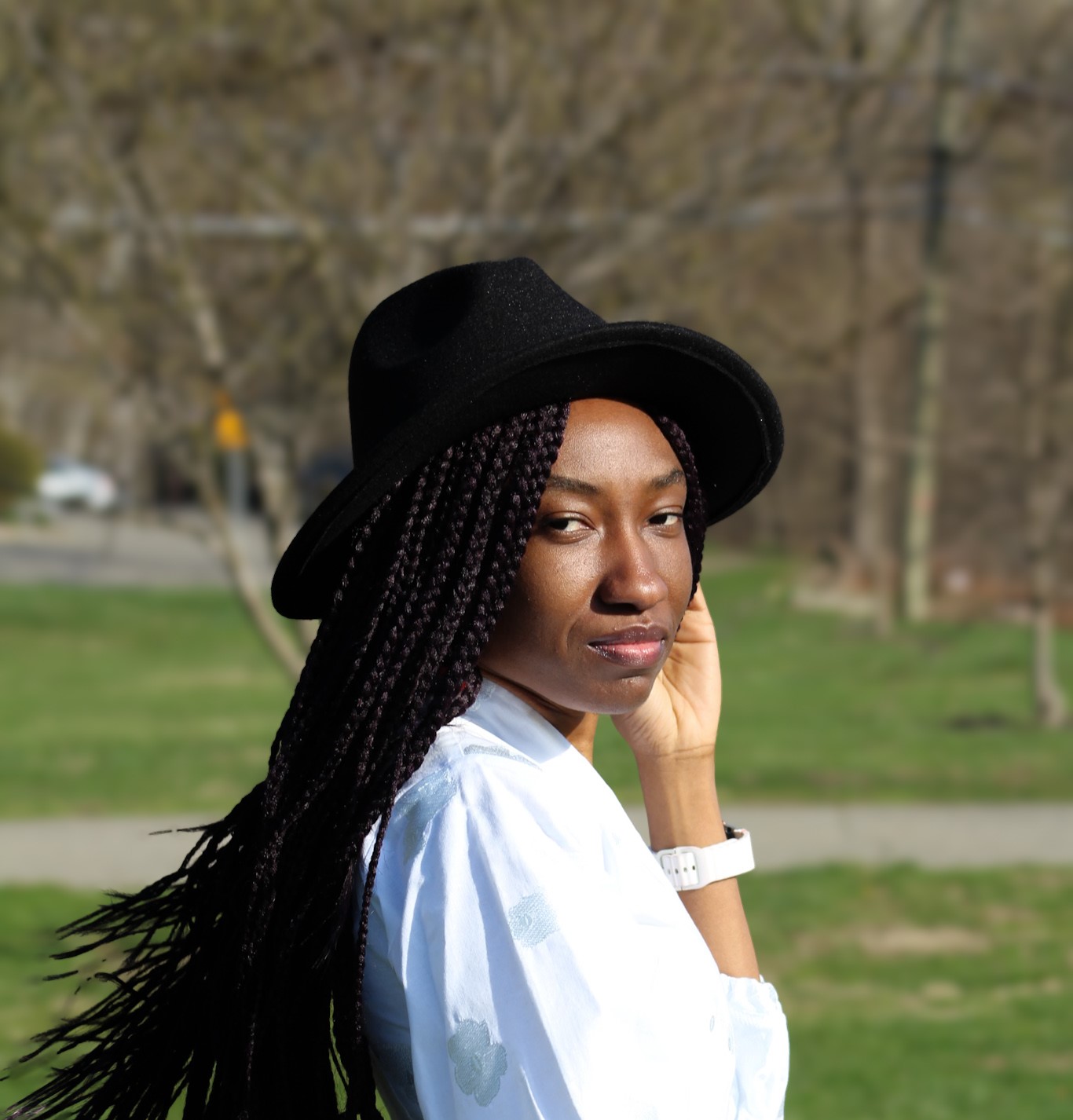
Ara Ẹni has spent her career writing from a genuine and instinctively profound connection. Having multi-national roots, the Ghanaian-Nigerian-American gospel artist built her earliest releases, “To The Girl,” “I Just Wanna Worship,” “It Was You”, in the honest, uncomfortable tension of the unfinished middle. Faith under pressure, girlhood becoming womanhood, quiet seasons with nothing public to show for them.
Her music has consistently made a home in the spaces between the dramatic before and the triumphant after, the long stretch where you are doing intense, invisible work with no milestone to point to yet. That specificity is what is bringing together her audience, a growing community of listeners across Ghana, Nigeria, and the diaspora who found in her songs a rare kind of company.
What makes Ara Ẹni’s perspective genuinely distinctive is where it comes from. Drawing on a Ghanaian, Nigerian, and American heritage, she describes them as assets rather than competing identities. And a Christian faith she has never treated as decorative, she writes from lived experience rather than from concept. Her sound reflects all of it: gospel at the foundation, Afrobeats and Afro-soul woven through, warm enough for the church and wide enough for anyone sitting just outside it.
Now, with “For My Matter,” she is offering her audience something she has been working toward all along. Rooted in a West African phrase that celebrates the ultimate relief of a divine force stepping into your corner to settle what you couldn’t, the track is a full-voiced, high-energy praise-break designed to be felt in your feet. It is a powerful declaration that joy does not have to wait for the storm to pass; it is a reminder that even in the middle of an unfinished season, you can still dance in the rain.
You hold three identities: an American with roots across Ghana and Nigeria. How does blending these three distinct cultural landscapes influence your daily personality and the way you view the world?
Ara Ẹni: I’m proud to be a cultural hybrid; it’s something I hold close. I see life mostly through my African lens, while my American upbringing gives me a distinct belief in boundless possibility, the practical, entrepreneurial drive to turn a vision into a tangible reality. The way I express myself shifts with the room. Some things you just can’t say in English with the same weight, so I’ll reach for the gravitas of Yoruba or Twi, even though I’m not fluent. Being Black in America keeps those roots alive, whether I speak the language or not. Ghana and Nigeria act like rival cousins, but it’s all love. There’s real joy in finding your people, like having my Ghana jersey on at the “For My Matter” shoot and strangers coming up just to say hi. The three identities don’t compete in me; they’re assets to each other.
A lot of artists say music chose them rather than the other way around. How did it happen for you?
Ara Ẹni: My family’s household was always rich with music, and it spanned continents and generations. My mother played the piano, my grandmother sang, and growing up between Ghana and America, I was surrounded by an incredibly diverse range of genres. I learned piano and keyboard young, but singing stayed secondary. I loved performing, though always in groups. Writing was always there too: I made up my own songs and stories as a kid, and through high school it turned mostly into poetry. In college, I wrote less, but I joined the gospel ensemble and kept singing. The shift came in March of last year when I played an original song at an open mic, and the immediate, emotional response of the audience shifted something in me. A few days later, watching an interview with Jennie Garth about embracing the parts of yourself you’ve forsaken, hit me deeply. I wrote “To The Girl” that same day, joined a songwriting club that week, and that’s when a long-standing hobby transformed into a real calling.
Your music explores doubt, rebuilding, the quiet seasons people don’t usually talk about. Where does that come from in your own story?
Ara Ẹni: These songs are forged in those quiet, unglamorous chapters that never make the highlight reel, stretches of waiting through illness, and seasons where my mental health was in a difficult place. I write specifically for the unfinished middle because I’ve lived in it: not the dramatic before or the victory after, but the long in-between where you’re not sure anything is moving. In my own journey, I didn’t always know how to sit with that stillness. Now, singing directly to that person and to myself lets me reframe that pain and offer real comfort to someone else who is moving through the dark.
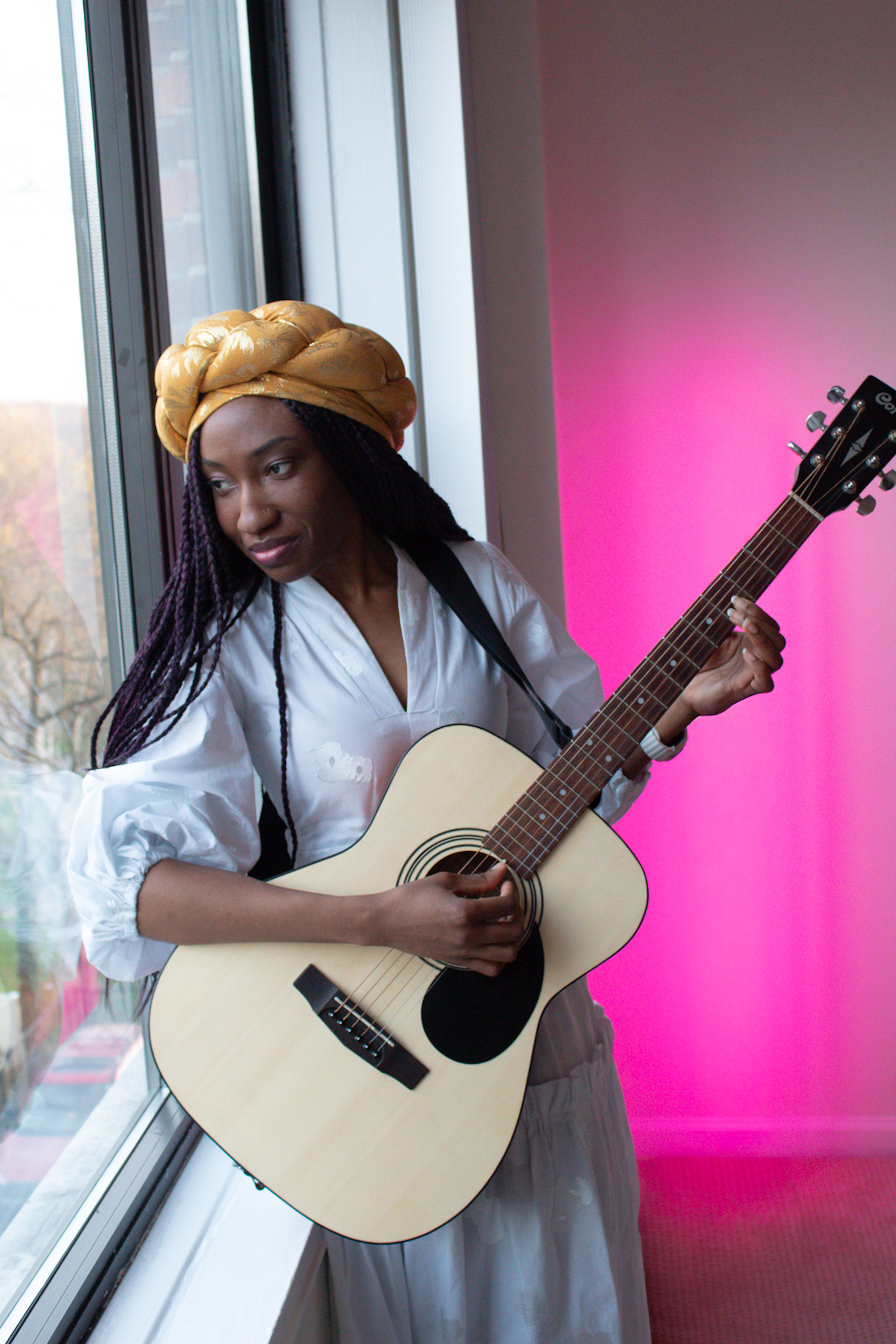
As an artist, faith and spirituality run through your music as a lived experience. How has your relationship with it shifted from when you were younger to who you are now?
Ara Ẹni: My faith started out inherited. I grew up Methodist and Anglican, always in church, going through the practices, but without a real personal anchor of my own. I’ve had two distinct seasons since: one where I didn’t have that relationship, and one where I did. The second was actually the harder of the two, but that’s the season the relationship sustained me through; it stopped being about checking boxes and became about actually knowing God and acting on what I’d come to know. Music became my soundtrack through that time. Today, my faith isn’t a performance; it’s a daily, deeply grounding practice that helps me process life’s chaos rather than avoiding it. That raw authenticity is the entire reason my music sounds the way it does.
Whose music were you growing up on? What voices got into you early and never really left?
Ara Ẹni: My earliest musical blueprints came straight from the church pews. The kinetic energy of Kirk Franklin, Israel Houghton, and Mary Mary, who made faith feel alive rather than rigid. In high school, I started discovering spirituality expressed in less standard ways, especially through Christian hip-hop artists like The Ambassador, the Cross Movement, and the 116 Clique (featuring Lecrae and Trip Lee), alongside Frank Edwards, Jamie Grace, V. Rose, and Kingzkid. Frank Edwards was particularly massive for me because he moved across so many styles, proving how expansive that sonic world could sound. Ultimately, you don’t choose your influences; you just look back years later and notice their DNA in your phrasing.
Your early releases like “To The Girl,” “I Just Wanna Worship,” and “It Was You” leaned heavily into themes of uncertainty, girlhood, and raw worship. How do you feel you’ve grown as an artist between those early tracks and your newest work?
Ara Ẹni: The biggest change has been in how I construct a record. With “For My Matter,” I moved past vocal delivery into active production. With my earlier songs, the tracks were largely completed by the time I entered the booth; I would find the bridge and deliver the vocals. “For My Matter” was the freest, most collaborative session I’ve ever had — featuring space to ideate on the spot and build and layer the vocal arrangements myself. Translating raw, physical emotion into the room was incredibly empowering. This growth is ultimately about confidence: owning and shaping a record while it is being built, rather than just delivering on someone else’s blueprint.
Your latest single, “For My Matter,” is described as your most joyful and free track yet. Musically, it blends soulful storytelling with Afrobeats and Afro-soul. What inspired you to pivot into this high-energy, “praise break” rhythm?
Ara Ẹni: A steady momentum toward this high-energy sound had been gathering across my last few releases. After the introspective themes of “I Just Wanna Worship” and the celebration of “It Was You,” I felt a deep pull toward movement and joy coming out of a long, heavy winter. Musically, “For My Matter” is a vibrant, mid-tempo Afro-fusion track set to a driving 117 BPM rhythm, built around synth and log drums with warm Afro-soul chords. It’s turning point hits right at the chorus after the second verse — that’s where the song breaks open into pure, uncontainable joy and stays there. That’s the spirit of Pass the Ball, the challenge I built around the song. Having spent enough time in the quiet, I wanted to deliver a sound that you could feel in your feet while providing a joyful, sun-drenched soundtrack for somebody’s summer. This joy isn’t surface-level; it’s the profound relief you feel only on the other side of a heavy season.
The title “For My Matter” carries a heavy Nigerian-inflected meaning — the idea that someone has stepped into your corner to settle what you couldn’t. What was the exact moment or breakthrough that made you say, “I need to write a song about this feeling right now”?
Ara Ẹni: When I first heard the demo from my production team, it felt like discovering the sonic autobiography I’d been trying to write myself. While my producer Andrew Daniels (Tbeatz) and his Oqtave team brought the core songwriting to this track — and I am deeply blessed by their brilliance — the record resonated so profoundly because it felt like the end credits to a season I had just lived. It was a perfect summary of my journey: validation and restoration in a moment where it felt like hope was lost. That alignment lit an immediate fire in me to claim this song, layer the vocal arrangements to capture that raw emotion, and carry its message of hope to anyone on a similar path.
You explicitly dedicate your music to “late bloomers and rebuilders navigating the unfinished middle.” Why do you feel society is so afraid of the “middle,” and what message do you hope your music brings to someone who feels like they are falling behind?
Ara Ẹni: Rather than fear, what we are really witnessing is a collective shyness around the unfinished middle of our journeys. It is easy to celebrate neat, final milestones like “I graduated” or “I got married.” It is much harder to articulate a season where you are doing intense, internal heavy lifting with nothing public to show for it yet. In a highly curated social-media culture, that quiet process can make you feel like you are losing, even when you are achieving massive, invisible victories. Every single day you show up is a step forward. I dedicate this song to late bloomers and rebuilders because that’s the journey I am on, too. To anyone who feels like they are unraveling while everyone else has it figured out: you are not falling behind, you are in the exact chapter where the real work happens.
What is the definitive shift you hope to spark in the way your audience approaches their own unfinished seasons?
Ara Ẹni: The shift I most want to spark is this: you can dance in the rain. It’s a reminder I need as much as anyone — I’m no expert, I forget it too. When you’re in a difficult season, the exit feels invisible, but God has come through for me so many times that I know these seasons are temporary. This track is a declaration that joy doesn’t have to wait for the storm to pass — you can celebrate in advance, praising Him before the breakthrough even shows up.
What do you hope this single opens up for what comes next?
Ara Ẹni: I want to spark joy and hope around the world this season. That’s why my first official pass of the Ball went to the Black Stars, and I’m looking for it to carry on across the world, no matter what country or team you support. The idea behind Pass the Ball is simple: you celebrate a moment when God showed up for you, take your own praise break to “For My Matter,” and pass that joy to the next person. It’s faith and football in the same breath, and it lets the song belong to everyone. Beyond that, I want to open new doorways for collaboration and explore other genres, carrying this same message of hope in new ways. I’m excited to be working on a live version with even more raw energy and drive. Having spent a long time singing from the quiet, this is the start of singing from freedom, and I want it to be a celebratory, uplifting soundtrack for somebody’s summer.